
Can the brain be illuminated with a photobiomodulation device?
Photobiomodulation therapy sometimes requires light to penetrate deep into the body in order to stimulate, support healing, or help regulate cells in deeper organs. This is especially true in transcranial photobiomodulation, where the goal is to reach the brain. But can we really shine light into the brain simply by placing a photobiomodulation device on the skull? Can this be done non-invasively and painlessly?

It’s understandable to be skeptical. So in this article, we’ll look at what has actually been demonstrated scientifically. Why can red and near-infrared light penetrate the body? How deep can it go? And finally, I’ll suggest a small experiment you can easily try at home.
A photobiomodulation device emits red or near-infrared light
This very specific light is directly “absorbed” by our cells
During photobiomodulation therapy, a device emits specific wavelengths of red or near-infrared light. This light is a form of energy and is absorbed by an enzyme called cytochrome c oxidase, which is found in the mitochondria of our cells.
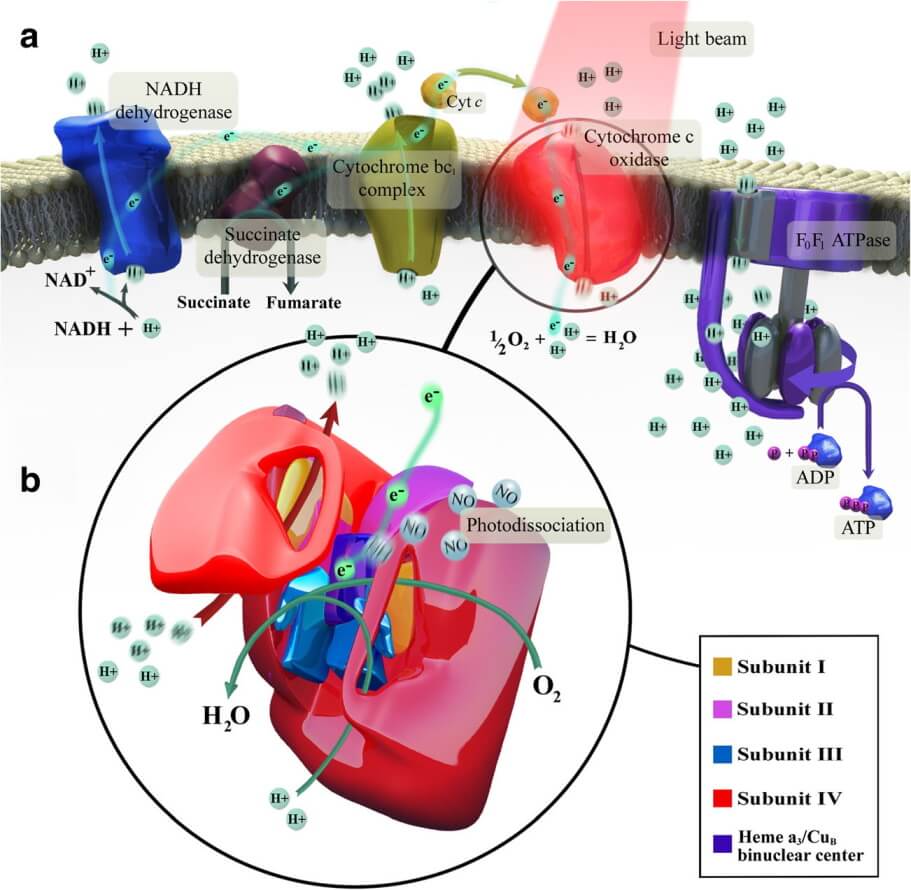
This enzyme uses the energy from the light to trigger a series of biochemical reactions that can support cellular activity and energy production.
The brain: an organ beyond the reach of light?
One of the main challenges in photobiomodulation therapy is reaching deeper organs with this specific type of light. It is relatively easy to illuminate the skin and influence superficial tissues, but reaching a deeper organ such as the brain is much more complex.
If we want neurons and other brain cells to be exposed to photobiomodulation, the light first has to pass through several natural barriers, including the hair, scalp, skull bone and blood.
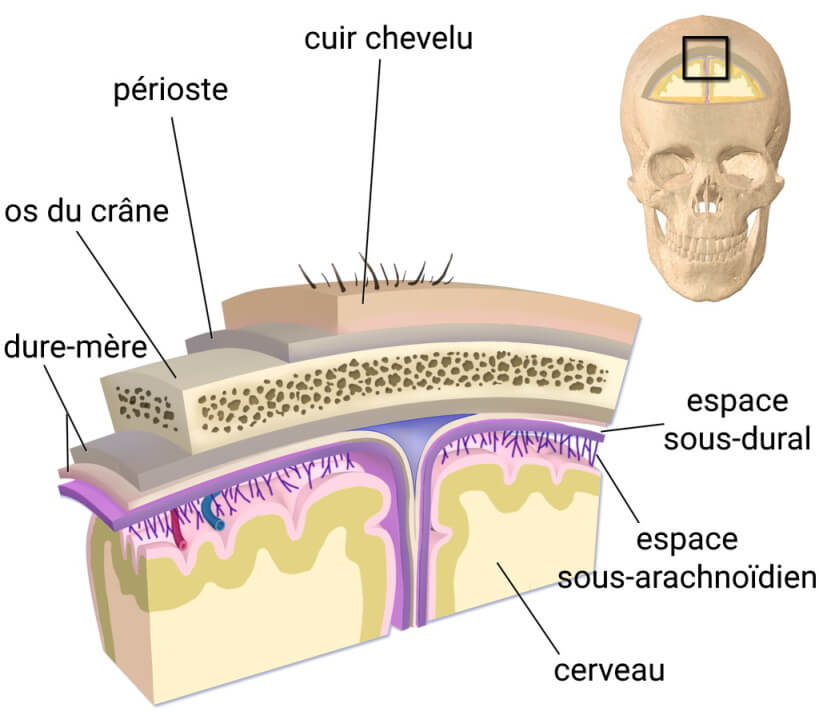
So what does science tell us about these tissues and fluids that surround and protect the brain?
Hair: a major barrier for photobiomodulation devices
Our hair, a remnant of our evolutionary history, acts as a natural barrier against UV radiation. It helps keep the head cooler in sunlight, but it can also block red and near-infrared light.

I have already written an article on this subject. The conclusion was clear: if you want light to reach deeper tissues in the head, you need to avoid the hair as much as possible or use areas with little or no hair, such as the forehead.
The scalp, blood, bone and other tissues
Once the hair is avoided, the light produced by the photobiomodulation device still has to pass through other natural barriers before it can reach the brain: the scalp, body fluids and the skull.
These biological tissues contain molecules that absorb light. These are called chromophores. The main chromophores encountered by the light include water, body fat, enzymes, melanin, hemoglobin and collagen.
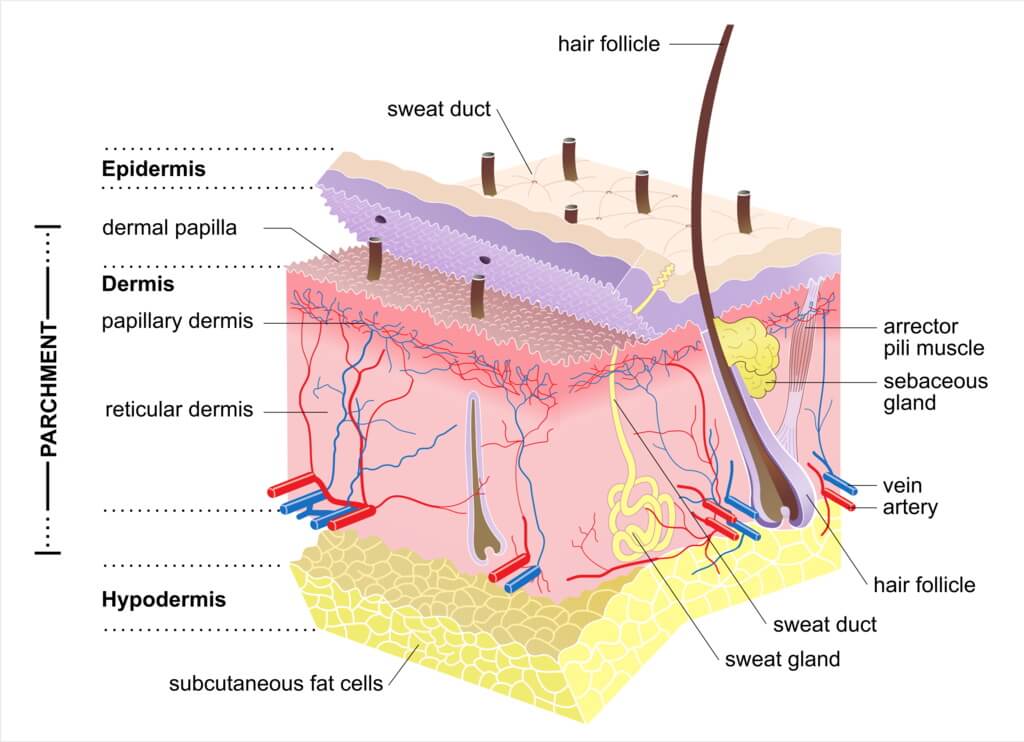
Fortunately, these chromophores have what is known as an optical window, where their ability to absorb light is lower.
The penetration of red and near-infrared light.
The absorption properties of chromophores have been studied for decades. We know that red and near-infrared light are generally absorbed less by biological tissues than many other wavelengths. When light is absorbed less, it can travel further through the body and potentially reach deeper tissues.
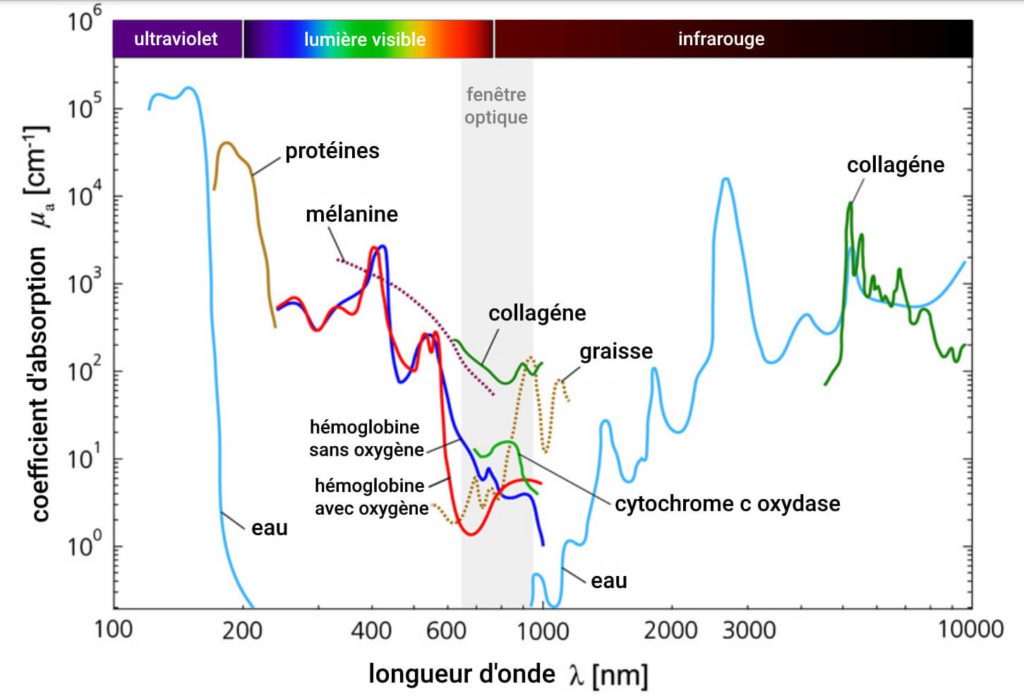
If you look at the graph above, you’ll notice that the optical window — shown in grey — corresponds to red and near-infrared light. This helps explain why green light penetrates less deeply than red light.
Near-infrared light around 810 nm is often highlighted for its relatively strong tissue penetration. That is the theory — but what happens in practice?
Human studies
Many studies have investigated and measured the penetration of light emitted by photobiomodulation devices in animals and humans. However, directly measuring light penetration into the brain of a living human being is difficult.
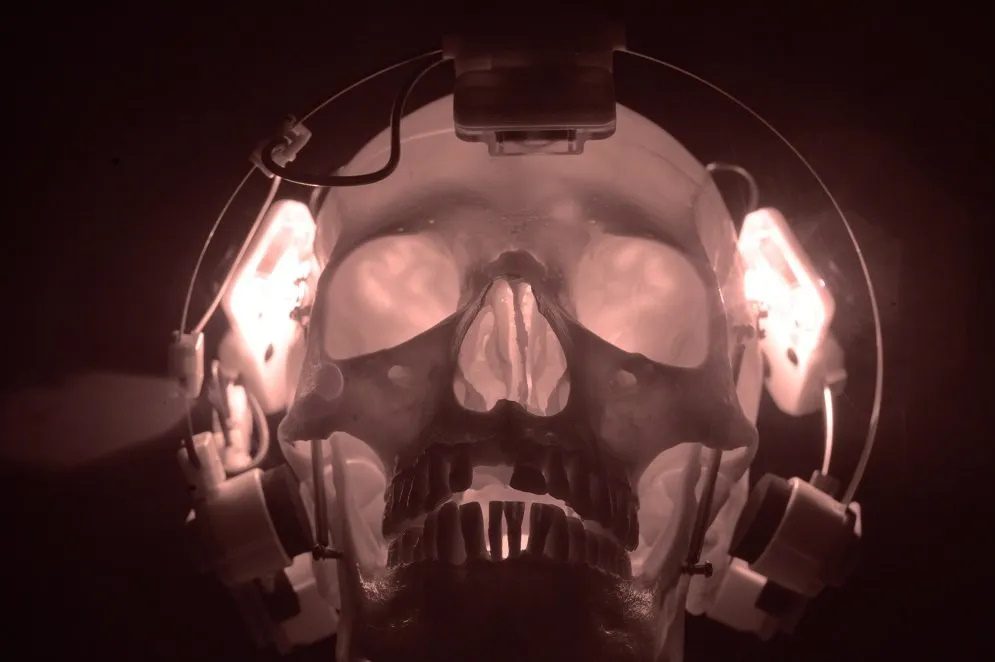
Because the brain is enclosed within the skull, researchers have had to use other methods, such as medical computer simulations and post-mortem studies using human tissue.
Monte Carlo simulations
In 2017, a Chinese research team created a detailed human head model using a medical simulation method known as Monte Carlo modelling. Different brain tissues were modelled along with their biological properties.
The researchers then assessed the penetration of light at different wavelengths and concluded that red and near-infrared light could penetrate brain tissue non-invasively.
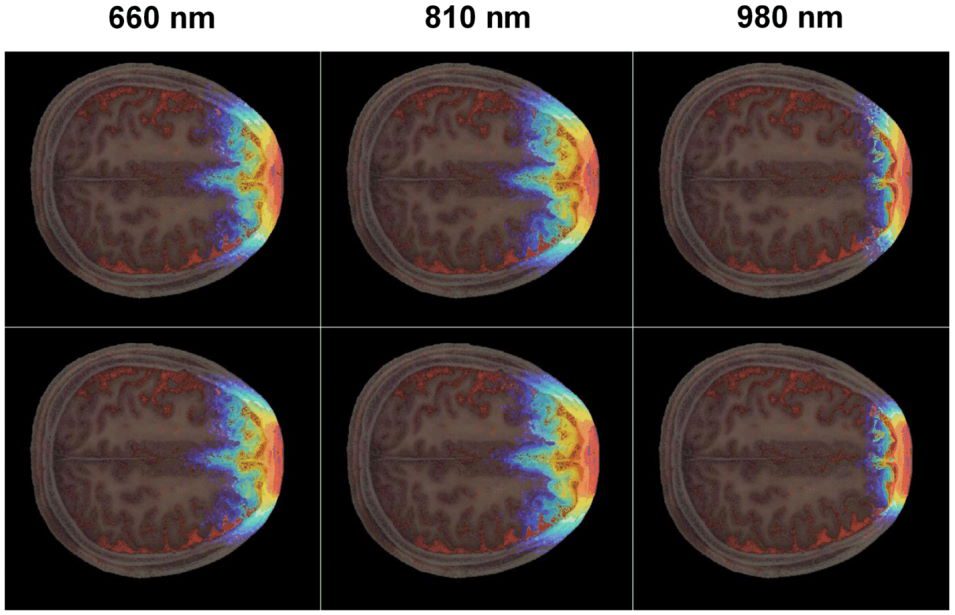
"Our study showed that 810 nm was the ideal choice for transcranial photobiomodulation, for the broadest and deepest penetration (…) This allowed the light to pass through both the gray matter and the white matter (editor's note: of the brain)"
Ting Li - Institute of Biomedical Engineering Chinese Academy of Medical Science and Peking Union Medical College
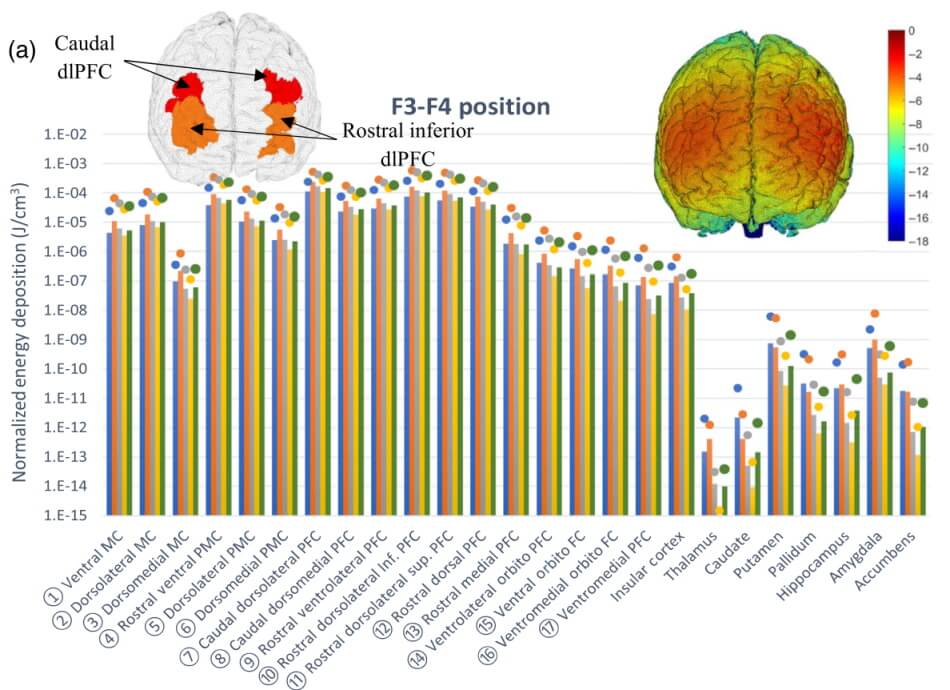
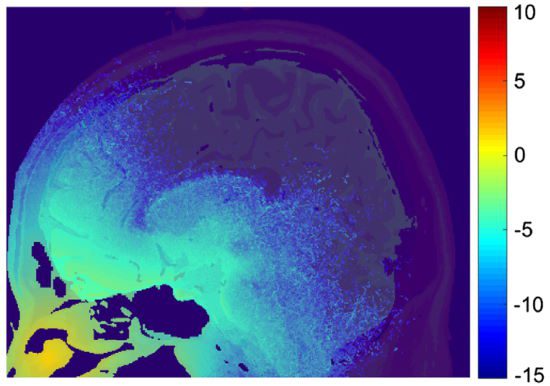
In 2019, Dr Paolo Cassano and his team also used medical simulation methods and confirmed that light could reach brain tissue.
The same study also found that near-infrared light could reach the frontal lobe using an intranasal photobiomodulation device.
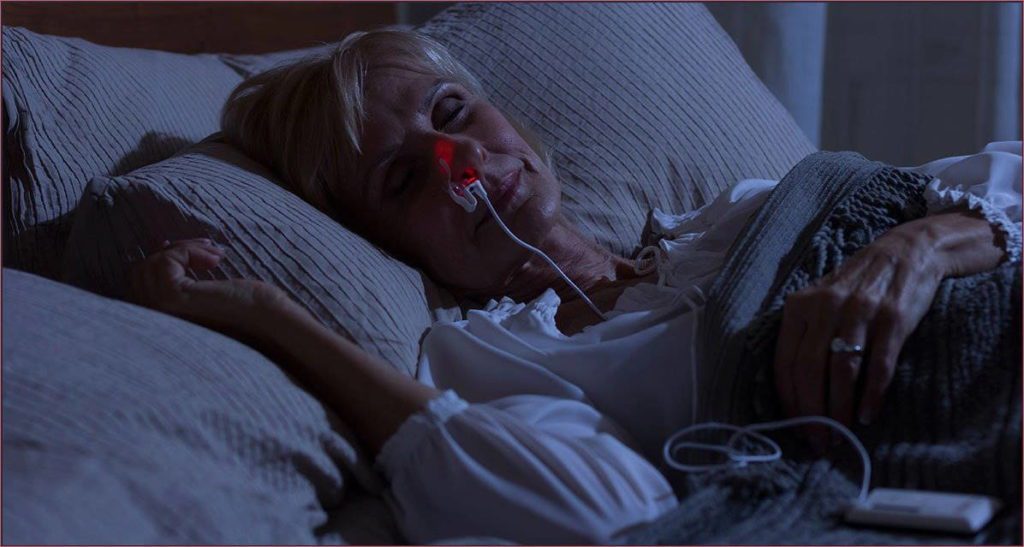
A woman resting during an intranasal photobiomodulation session
Post mortem studies
It is difficult, if not impossible, to perform this type of invasive measurement in living human subjects. However, researchers have studied light penetration using human cadaver tissue.
In 2012, an American research team used an intact human head with the surrounding tissues still present. They detected near-infrared light at a depth of 1 cm. Their results also showed better penetration with near-infrared light at 830 nm than with red light at 633 nm.
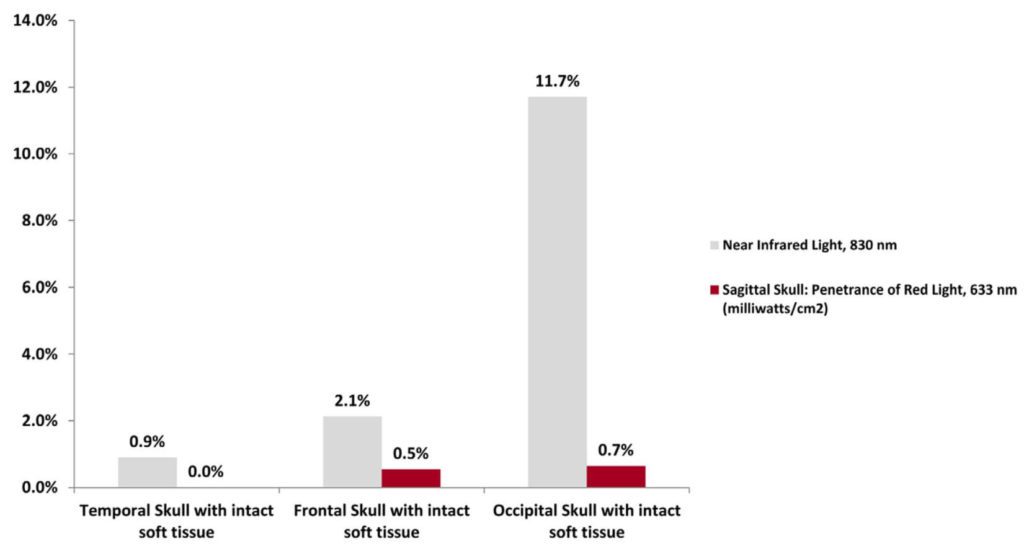
It is worth noting that this study used an LED-based photobiomodulation device. Even with lower power compared with laser devices, the light still reached deeper tissues. A patient using an LED device would generally feel little or nothing, perhaps only a slight warmth on the scalp.
In 2015, another American team also investigated light penetration in a human cadaver head. In this case, a much more powerful 5-watt laser device was used, and penetration depths of 4 to 5 cm were reported.
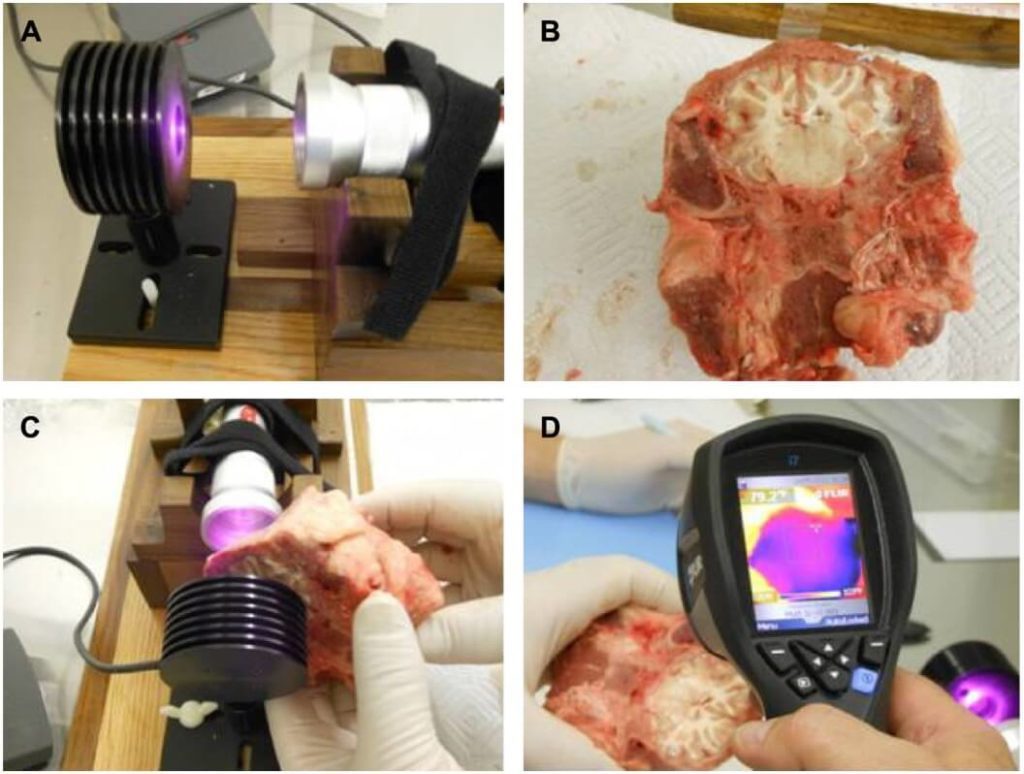
In normal photobiomodulation use, that level of power is not necessarily required. This example simply shows that near-infrared light can reach significant depths under certain conditions.
"Our results clearly demonstrate the penetration of measurable 808 nm wavelength light through the scalp, skull and meninges to a brain depth of 40 to 50 mm" (…) 808 nm wavelength light demonstrated superior penetration of central nervous system tissues"
Dr. Clark E. Tedford
A simple experiment to observe red light penetration
Here is a simple experiment you can try to illustrate the penetration of red light.
Turn on the flashlight on your smartphone and place your finger over it.
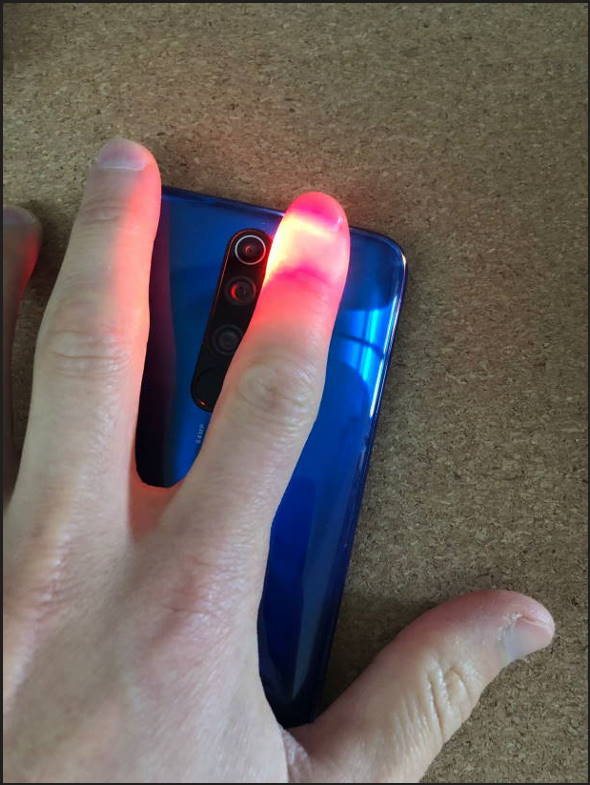
You’ll notice that the tip of your finger appears red. Why?
Your first thought may be that the white light from the flashlight is simply illuminating the blood. But that is not quite what is happening.
White light from your phone’s flash is produced by a white LED. If you pass that white light through a prism, you can see that it is actually made up of a whole range of colors.
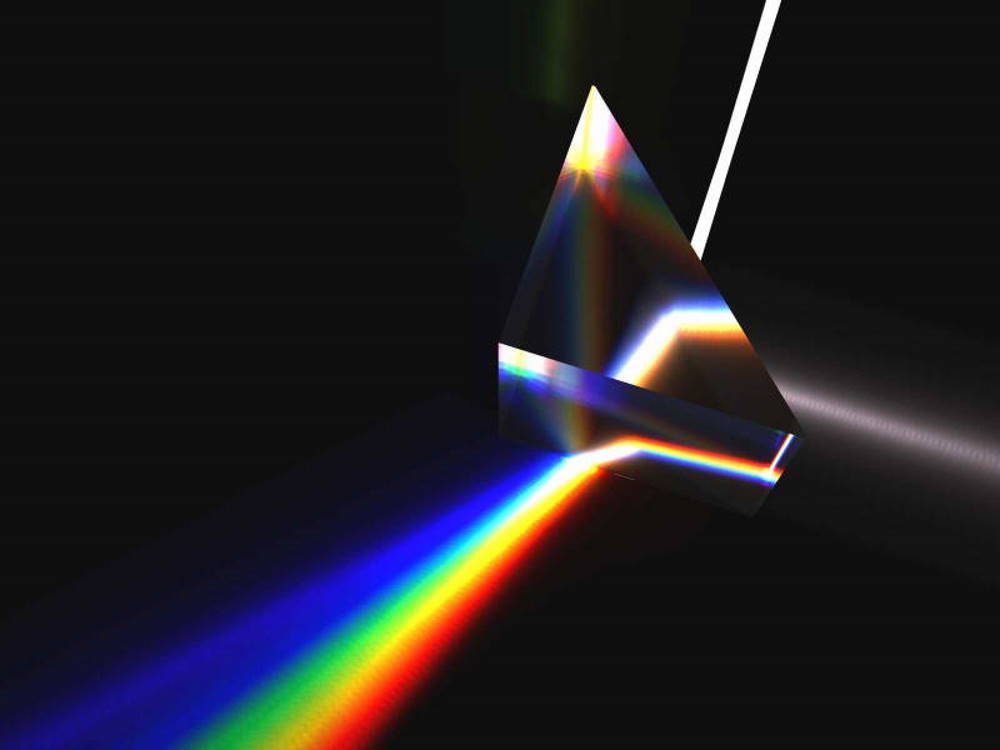
A prism splitting white light
So if your fingertip appears red, it is because the tissues in your finger absorb most wavelengths of light more strongly, while red light penetrates more deeply. The white light from the flash enters your finger, and the red wavelengths are the ones that pass through most effectively and reach your eyes.
Yes, a photobiomodulation device can deliver light to the brain.
Yes, scientific studies have shown that red and near-infrared light can penetrate tissues of the head and reach the brain. In this article, I have only shared a few examples of the available studies. Penetration measurements vary from one study to another, ranging from a few millimeters to several centimeters.
However, transcranial photobiomodulation may be simple to understand in principle, but it is much more complex to implement properly. Not every photobiomodulation device is suitable for delivering light to deeper tissues. For example, a standard photobiomodulation panel commonly sold for general use is not necessarily designed to target deeper organs such as the brain.
Here is a brief summary of the key points covered in this article:
- Chromophores found in the different tissues surrounding and protecting the brain absorb both visible and invisible light.
- However, there is an optical window in the red and near-infrared range where absorption by these chromophores is lower.
- Certain wavelengths of red and near-infrared light can penetrate human tissues more deeply and may reach the brain.
- This light can interact with cellular components, including mitochondria.
- These interactions can trigger biochemical responses within cells.
Finally, successful transcranial photobiomodulation is not only about penetration. It also depends on using an appropriate device, whether LED or laser-based, as well as the right power and exposure time in order to deliver an appropriate light dose.